In his book, “Surprised by Joy,” C. S. Lewis wrote that, in a period of great pessimism, he felt
“outrage that I had been created without my own permission.”
I have felt that feeling. In fact, much of what he writes about atheism and skepticism resonates with me.
A dear friend told me he is reading “Mere Christianity” by C. S. (Clive Staples) Lewis out of curiosity. The part that stands out in my mind from that book is that the most diabolical of sins is the wrong kind of pride. True. So true. I don’t understand or agree with everything Lewis writes, but I’d like to read the book again for the wisdom I found there years ago and have forgotten. And I’ve felt nudged to revisit him in his other works.
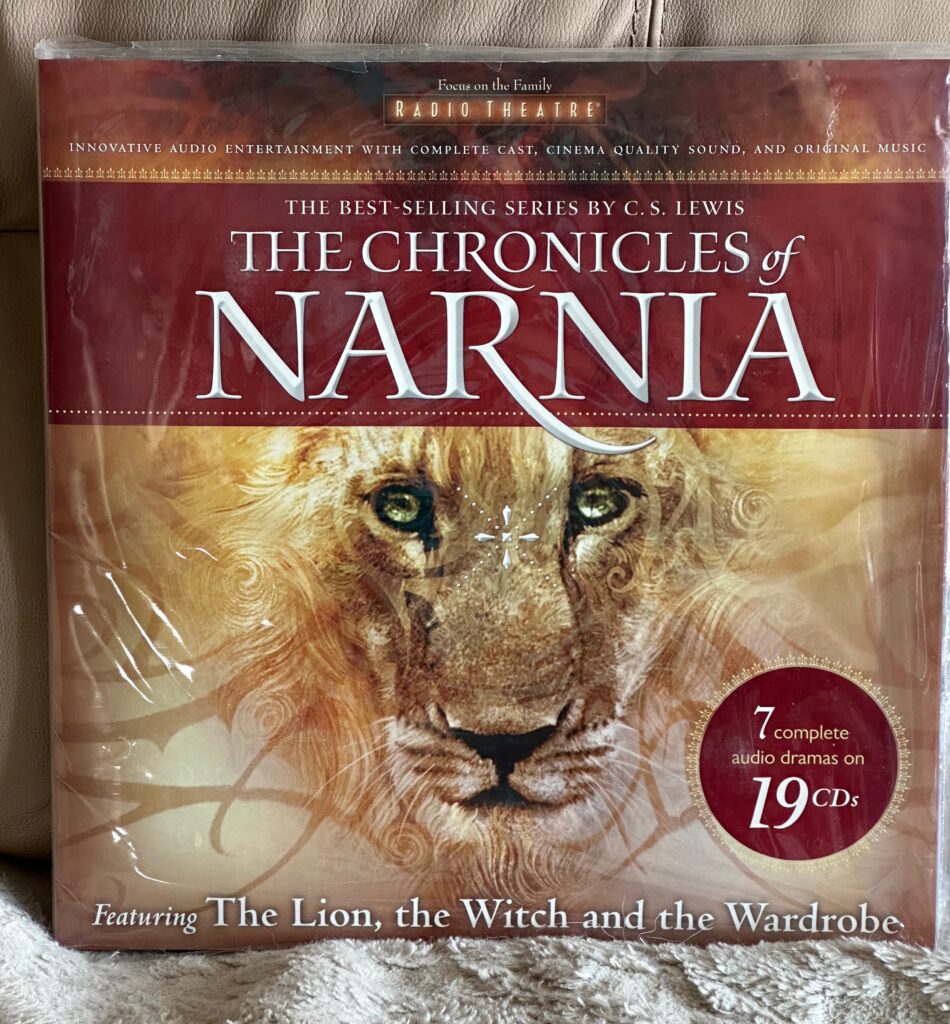
I first met C. S. Lewis in a magical land he created. I read “The Chronicles of Narnia” as a young adult, and then, again, to our children, and I recently listened to an audio version as I drove to Red Deer and back, Grande Prairie and back, etc.
When confronted by the idea of Aslan, the lion, Lucy asks, “Is He safe?”
“Safe?” said Mr. Beaver.”Who said anything about safe? ‘Course he isn’t safe. But he’s good. He’s the King, I tell you.”
Mr. Tumnus also says, “He’s wild, you know. Not a tame lion.”
My view of such fantasy literature is similar to my view of Jesus’ parables. “Art is a lie that helps us realize the truth” (Pablo Picasso).
I have the book “A Year with C. S. Lewis – Daily Readings from his Classic Works.” Of course, as someone who doesn’t do anything faithfully on a daily basis except sleep, eat, and drink, I haven’t read the readings daily. However, I have dog-eared my favourite pages and underlined bits of wisdom that sparkle with truth and inspiration. This is a practice Lewis emphatically condemns as disrespect for a book, but it helps me find those sparkles in my hour of need.
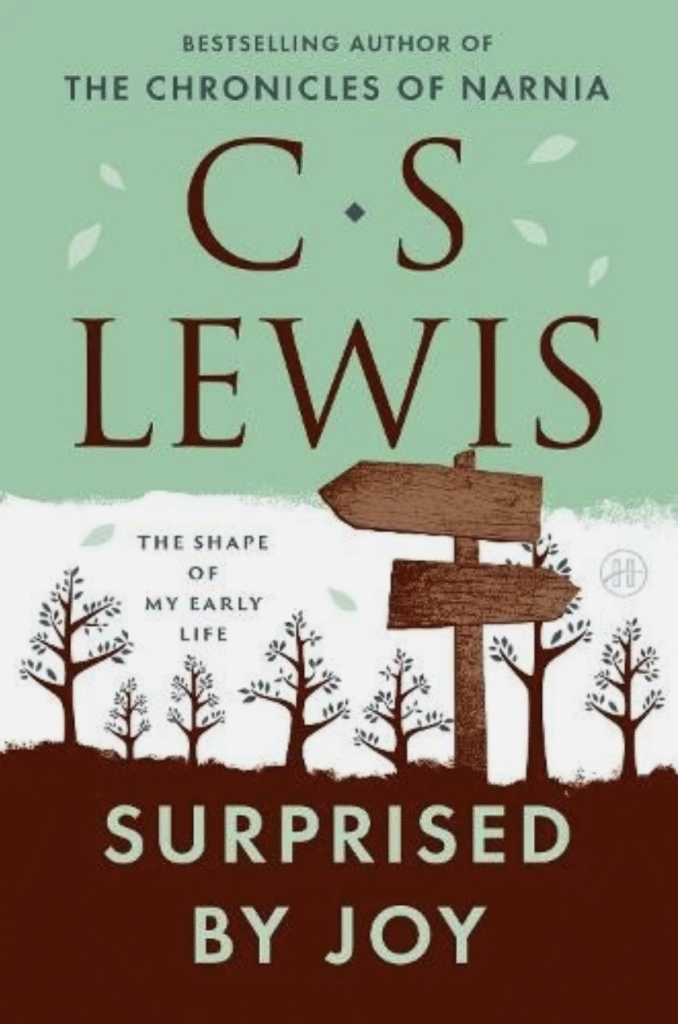
The one book I have long wanted to read, and have finally started is “Surprised by Joy – the Shape of my Early Life – an Accidental Journey from Atheism to Christianity.”
I was a sad, angry agnostic/atheist at age 11, and I was curious how and when Clive, a boy raised in the Church of Ireland, would have entered into a similar state. And how did he eventually find the Joy of God, or rather, how did the Joy of God find him?
Lewis writes with great joy of his early childhood, the beauty of the Irish landscape, his fascination with Norse mythology and the stories and worlds created in his imagination with his brother. He describes certain moments of deep longing as joy.
His mother died of cancer when he was 9 years old, and that was the end of his childhood as he and his brother had enjoyed so heartily. He was sent to boarding school, and some of his horrific experiences remind me of the stories I’ve heard from Canadian residential school survivors.
My childhood was not nearly as brutal, but deep loss can leave one seriously doubting the existence of a loving God.

I often joke that i was raised as a heathen on a pig farm. I remember my mother saying to our faithful and beloved Border Collie, “Sick ‘em, Tippy!” whenever someone came around “peddling religion”. And the terrified evangelists didn’t dare exit their vehicle!
I did hear about God and Jesus from various sources. My cousin, Barb, invited me to Bible Camp, where we were encouraged with rewards to memorize scripture verses. I memorized John 3:16 – “For God so loved the world that he gave his only begotten son, that whosoever believeth in him should not perish but have everlasting life.” I relayed this information to my mother and three siblings on the way home in the car; however, they were far more interested in my memorized rendition of “Prinderella and the Cince” that I learned from our cabin leader. In fact, Mom had to pull over to the side of the road she was laughing so hard.
I also remember a few church services in a little building near Joffre. We didn’t have a minister, but someone was organizing meetings for the sake of us little heathens, and I have a fond memory of doing a reading with my best friend, Dixie.
Dixie and I rode horses together (no saddle, and sometimes using binder twine as a bridle). We explored the beautiful canyon of the Red Deer River, rode school bus together, had sleepovers, and played together whenever the opportunity arose or could be begged and arranged.
When we were 11 years old, my dad took off with her mother, and that was the end of our childhood as we knew it. We moved into Red Deer and left behind the farm, the wheat fields, the forest behind our home, the chickens, pigs, gardens, neighbours, and worst of all, our canine companion and partner in adventure, Tippy. It wasn’t just my own suffering that burdened me. Dixie was the oldest child in her family. She was without a mother at age 11, with two younger siblings to care for, and a father devastated by rejection and abandonment. To see my mother suffer this loss was unbearable, and the discrimination she faced as a divorced woman in the 60s left us all frustrated with the injustice. The four of us children felt the pain of abandonment in our own ways. My older sister was forced into adulthood at age 15. It wasn’t until many years later that I recognized my own father’s pain and that of Dixie’s mom. To be caught up in a love affair can be as addictive as meth, or, in Narnia terms, “enchanted Turkish delight.”
I remember going back to visit my cousin, Gail, who lived nearby on the farm. We were harvesting potatoes in the field, and maybe it was the heat of the sun that was messing with my mind, but I decided, there and then, and grew more convinced with each potato I picked up from the earth that if God exists, he is some big ogre in the sky who is looking down on us like he’s watching some sick soap opera and mocking our failed attempts at happiness and love. If God exists, he is certainly laughing when I’m crying.
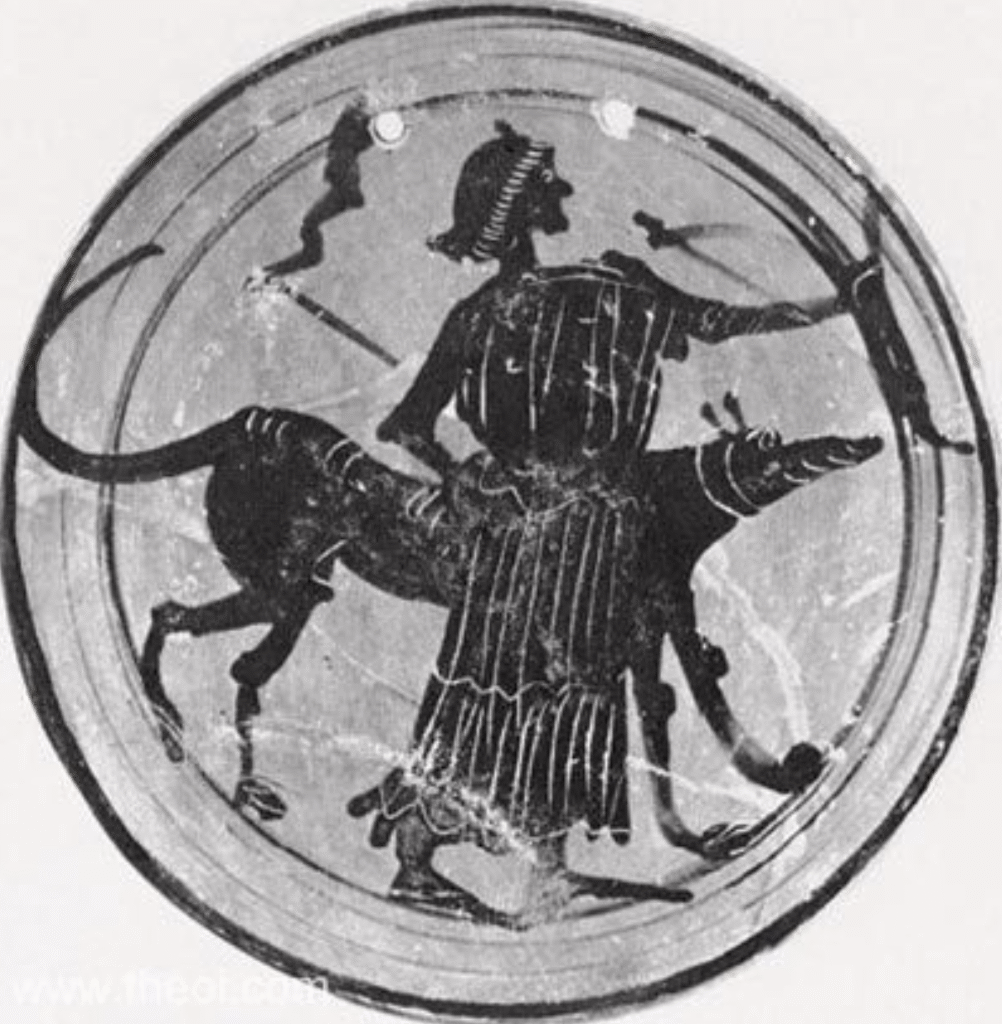
Reading “Surprised by Joy” is a great challenge for me. Lewis uses so many words I don’t know, or I think I might know, but I have to look them up to be sure. And he refers to works of literature and music with which I am not familiar. But, hey! Now I know that Artemis is the Greek goddess of the hunt, the wilderness, wild animals…and was often said to roam the forests and mountains, attended by her entourage of nymphs.
It isn’t quite as bad as the reading of the French philosopher, René Descartes, assigned by Professor Siegfried Belter in our third year of a Bachelor of Theology program. Descartes, who, after 40 pages of almost-incomprehensible, complex-beyond-belief run-on sentences, concludes, “I think; therefore, I exist.” (A fellow student, equally exhausted from the exercise, said, “I stink; therefore, I exist.”)
I don’t understand everything Lewis writes, but I keep telling myself this is good for my brain, and his subtle humour sneaks up on me and cracks me up.
He writes seriously atheistic/agnostic conclusions with which I can totally relate such as,
“I maintained that God did not exist.
I was also very angry with God for not existing.
I was equally angry with Him for creating a world” (115).
He goes on to indignantly question: What right does God have to force creatures into existence in a world of suffering?
I’d never gone quite that far in my hurt, angry, disgusted-with-God thinking, but it’s an authentic, articulate question.
Lewis went on to attend college, and then chose to serve in World War I, where he saw many atrocities, lost friends, and suffered injury.
He attended Oxford and describes with great insight the friends he met there, the challenges to his thinking, the expansion of his views, and lessons learned about dangerous philosophies.
Later in his story, Lewis says he felt “outrage that I had been created without my own permission.”
At the brilliant seriousness and ridiculousness of this statement, I burst into laughter that grew into unstoppable giggles!
This is it! This gives expression to my soul in my deepest, darkest times of depression, when all I could do was cry and sleep. I didn’t want to die, but I couldn’t stand to be awake. And this was decades after giving my life to Jesus.
I have been surprised by the joy of finally hearing my anguish put into words! I had been created without my own permission!
Of course, I wouldn’t have it any other way, and I’m deeply grateful to be alive, but I have felt this outrage. And, of course, it has occurred to me that a child could say the same thing to their parents. But we wanted children to love.
There is a world of difference between Clive Staples Lewis’ world and my world, my experience, my influences, my generation, my culture, my intellect, education, knowledge of languages, history, and philosophy… and yet, his words, his despair, his discoveries, his joy, his humour, his being discovered and pursued by a God of love…the story of his doubts and his faith resonates.
I haven’t finished the book yet, but I shall continue to look up words and references and to give thanks for people who reflect the intricate, wild, and overwhelming grace and surprising joy of the Creator, even, or especially, in this dark, sad world where there is no truly satisfactory explanation or justification or solution, in my human view, for all this suffering.
There are great thinkers who are angry with God for giving us freedom of choice. They say it was a collosal mistake. Was the risk worth it? Is all this suffering worth it, just for the sake of making authentic love possible?
Certainly, Jesus bears or shares the weight of that “mistake” on the cross and in all of our pain, which he feels alongside us.
Tomorrow night we’re going to watch, again, “Fiddler on the Roof” where we hear about the Jewish tradition of thought that can allow for two seemingly-opposing views to both be true. “You know, you’re right…You know, you are also right…”
Indeed…He’s not a tame lion, and this is not a tame life. I love how Lewis describes the most minute bits of beauty mixed with longing in the present moment, even when World War I is raging and he knows he will soon be engulfed in it.
The journey of faith in God is as unique as every person created in His image.
For some, it’s linear; they hear God knocking at the door of their heart, and they answer and invite Him in. For others, it’s, well, nonlinear. “I finally found my rhythm when I realized that even the steps backward were part of the dance” (Melody Godfred).
For some, it’s “seeing the light” or having blinders removed. For others, it’s “hearing the music” of Beethovan’s violin concerto and knowing that it’s more than horsehair scraping against catgut. (Strings were historically made from animal intestines. Eeeooo!)
For some, it’s freedom from whatever vice has enslaved them.For others, it’s freedom to be the person they’re created to be. Freedom to be filled with a Spirit of love rather than a spirit of fear. Freedom to love and serve with the gifts, abilities, and time they have.
For some, like Dietrich Bonhoeffer, in Nazi Germany, it involved standing up to evil, no matter the cost…
For others, like me, it may be a combination of all of the above – a living, breathing, hurting, healing, dancing, growing relationship with a myriad of questions, disillusionments, side trails, adventures… and surprises.
Whatever your journey, may you be surprised by joy in the present moment!